The Judgment of History: The Necessity of Hiroshima and Nagasaki
Special Supplement
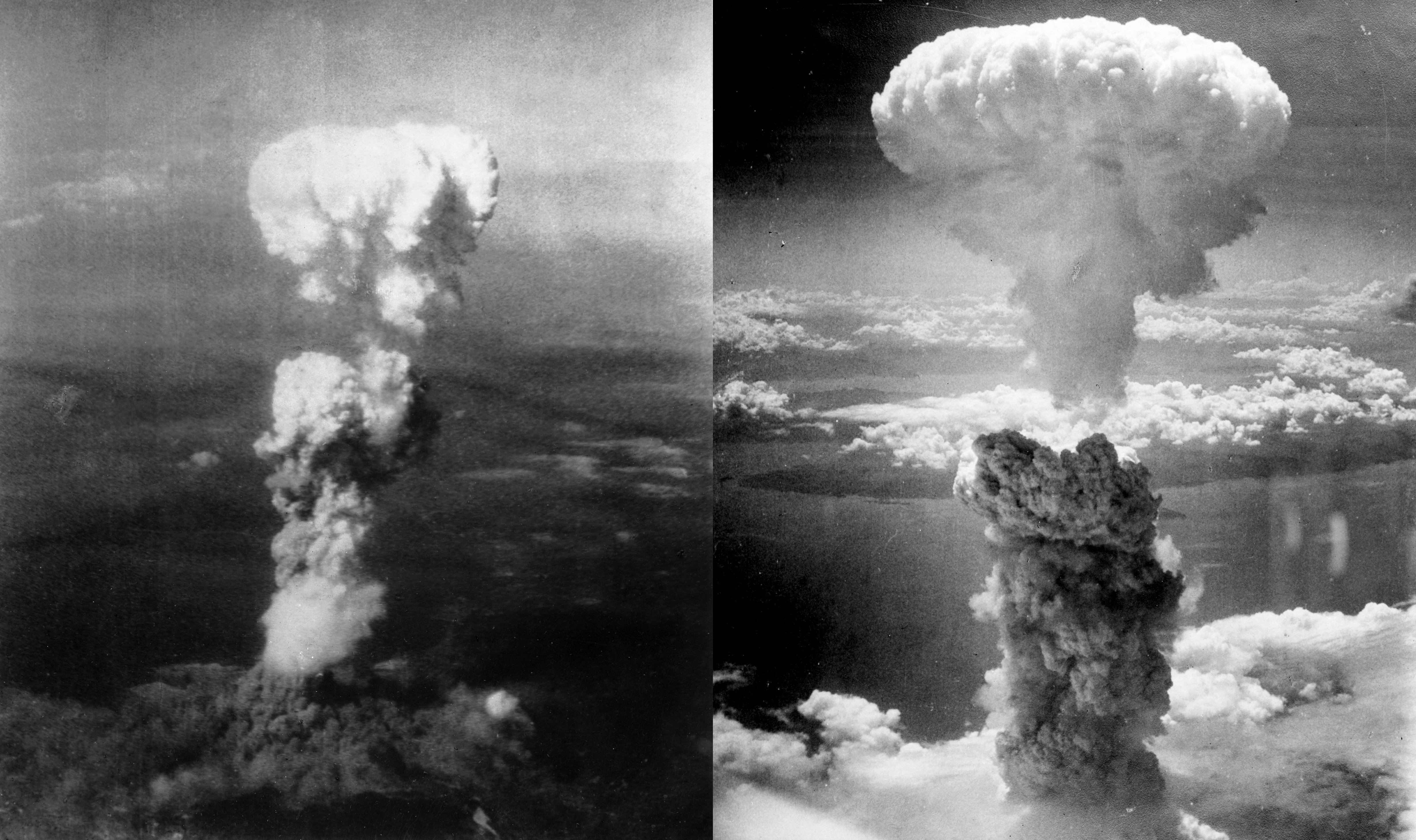
Hiroshima, 8:15 AM, August 6, 1945. The first combat-deployed atomic bomb in human history — “Little Boy” — detonated at 600 meters altitude. A mushroom cloud rose into the sky. Approximately 80,000 people died that day; the entire city was turned to ash. Three days later, Nagasaki was struck by the second bomb, “Fat Man,” killing another approximately 40,000.
This sole record of nuclear weapons used in actual warfare remains a fierce controversy to this day: Was the atomic bomb a necessary measure to end World War II, or an unnecessary atrocity? This special supplement examines the core contours of this debate from a historical decision-making perspective.
Part 1: Context — Japan’s Resistance Will and “One Hundred Million Gyokusai”
A Cornered Empire Fighting to the Last
In April 1945, Hitler committed suicide and Nazi Germany surrendered. The European war ended, but Japan continued to resist desperately in the Pacific. At the Potsdam Conference in July 1945, the United States, Britain, and China jointly issued the Potsdam Declaration, demanding Japan’s unconditional surrender.
Japan’s response was silence.
In reality, the Japanese military had already drafted an “Operation Ketsu-Go” — a homeland defense plan preparing for total resistance when Allied forces landed on the main Japanese islands. At its core was the “One Hundred Million Gyokusai” slogan — gambling the lives of a hundred million people for a so-called “dignified peace.”
Kamikaze Units and Desperate Resistance
In the Battle of Leyte Gulf in October 1944, Japan first deployed large-scale kamikaze tactics — pilots crashing bomb-laden aircraft directly into American warships. This suicide-only tactical doctrine reflected the高层’s stubborn stance that rather than surrender, they would shatter like a jewel.
Throughout the Pacific War, Japan’s prisoner-of-war rate was remarkably low. On Saipan, Iwo Jima, and Okinawa, thousands of Japanese soldiers chose to detonate grenades on themselves or leap collectively from cliffs rather than be captured. This was not courage — it was madness distorted by extreme ideology.
Part 2: Allied Casualty Projections — Why a Land Invasion Had to Be Avoided
Operation Olympic: The Invasion That Wasn’t
In June 1945, the U.S. military drafted Operation Olympic, the plan to invade mainland Japan, scheduled for November 1945. Military historians’ estimates based on available data projected:
- Allied side: Total casualties could reach 1 million, with approximately 250,000 to 400,000 dead
- Japanese side: Military and civilian casualties could reach 5 to 10 million
- Duration: The war could continue until 1947 or later
President Truman noted in his memoirs that it was after receiving briefings on these casualty projections that he authorized the use of the atomic bomb.
Soviet Entry and the Shadow of Yalta
On August 8, 1945, only three months after Germany’s surrender, the Soviet Union formally declared war on Japan and attacked the Kwantung Army in Northeast China. This move further squeezed Japan’s diplomatic room — and simultaneously caused American policymakers to fear that if Japan surrendered to the Soviet Union rather than the United States, the USSR might occupy the greater part of the Japanese home islands.
Historian Gar Alperovitz argued in Atomic Diplomacy: Hiroshima and Potsdam that the United States also had strategic considerations — demonstrating nuclear power to the Soviet Union to gain advantage in postwar negotiations. This “atomic diplomacy” thesis remains contested to this day.
Part 3: The Logic of Decision — Why the Atomic Bomb Was the “Optimal Choice”
Accelerating the War’s End, Reducing Total Casualties
The core logic supporting the “necessity” argument is this: Although the atomic bombs directly caused approximately 200,000 civilian deaths (most instantaneous), compared to the potentially millions who might have died in a prolonged war, this was in fact “choosing the lesser of two evils.”
From a purely mathematical perspective: Without the atomic bombs, had the Allies launched Operation Olympic and Japan carried out “One Hundred Million Gyokusai” resistance, total deaths could have far exceeded 200,000. The atomic bombs prompted Japan’s surrender on August 15 — ending the war within two weeks.
Breaking the Diplomatic Stalemate, Forcing Immediate Ceasefire
The August 6 Hiroshima bomb and the August 9 Soviet entry shattered the strategic illusions of Japan’s military leadership. On the night of August 9, just hours after Nagasaki was bombed, Emperor Hirohito personally intervened, deciding to accept the Potsdam Declaration and announce surrender.
Hardliners within the Japanese military attempted a coup to prevent surrender, but after the Emperor’s intervention, the coup collapsed. Without this external coercive shock, whether and when a surrender decision could have been reached remains a large question mark.
Part 4: Controversy and Reflection — Historical Complexity Cannot Be Simplified
“Atomic Diplomacy” Thesis: Strategic Deterrence as Motivation
Critics argue that the U.S. motivation for using the atomic bomb was not purely “reducing casualties” but also strategic advantage vis-à-vis the Soviet Union. Historians like Alperovitz contend that the Truman administration hoped to leverage the demonstration of nuclear power to secure an advantageous position in the postwar world order. If this argument holds, the atomic bomb became, to some degree, a pawn in political bargaining rather than a purely humanitarian choice.
Indiscriminate Civilian Killing: An Unavoidable Moral Dilemma
From any perspective, the indiscriminate nuclear strikes against Hiroshima and Nagasaki civilians constitute an unavoidable moral dilemma. The atomic bomb’s destructive power made no distinction between soldier and civilian, male or female, old or young. At the hypocenter, thousands of people were vaporized instantaneously; many more died in the weeks and months following from radiation.
This indiscriminate killing bears a morally similar character to the Nazi Holocaust against European Jews: mass killing of innocent civilians in the name of a “higher purpose.”
History’s Lesson: Decisions Cannot Be Removed from Their Context
The most difficult aspect of evaluating historical decisions is that we can never truly know whether “the alternative” would have actually occurred. “Without the atomic bombs, more people would have died in the war” — this argument is essentially a counterfactual inference that cannot be directly verified.
The historian’s duty is not to defend or condemn decision-makers, but to reconstruct the historical context as faithfully as possible, enabling later generations to understand what choices decision-makers made given what information they had.
Conclusion
The mushroom clouds over Hiroshima and Nagasaki have dissipated for eighty years. The debate over the atomic bombs’ “necessity” will perhaps never reach a conclusion satisfying to all.
But one thing is certain: The invention and use of atomic bombs marked humanity’s entry into the nuclear age, escalating warfare’s consequences from regional catastrophes to a potential threat capable of destroying human civilization itself. Today, facing the Korean Peninsula nuclear standoff, Iran’s nuclear issue, and other challenges, looking back at Hiroshima and Nagasaki should make us deeply consider: How can we prevent the再次 use of such civilization-ending weapons in diplomatic bargaining?
Series Preview: The third article in this series will examine the post-war controversy surrounding Article 9 of Japan’s Pacifist Constitution and how historical revisionism denies war crimes and glorifies the history of aggression.
References
- Richard B. Frank, Downfall: The End of the Imperial Japanese Empire, Random House, 1999.
- Gar Alperovitz, Atomic Diplomacy: Hiroshima and Potsdam, Penguin Books, 1965/1994.
- Winston S. Churchill, The Second World War, Cassell, 1953.
- Antony Beevor, The Second World War, Weidenfeld & Nicolson, 2012.
- Tsuyoshi Hasegawa, Racing the Enemy: Stalin, Truman, and the Surrender of Japan, Harvard University Press, 2005.
Leave a comment